I have moved…

Thank you for following my blog posts and I hope they are interesting for you even if my formatting is poor.

Due to my lack of experience maintaining a blog, I have moved and have also adopted my own domain to simplify the process and improve your experience.

If you are interested in continuing to read my scintillating blog posts, then I would love it if you would click HERE to go to the new domain and subscribe.

www.eldergeo.com

Thank you so much for taking the time to follow my postings.

Changing what’s in the Mirror

A message to those of you who don’t like what you see in the mirror, particularly to young women.

You are bombarded by messages about body shape and size which may create feelings of inadequacy.  What to do?  One option is to ignore these completely and be yourself so long as your health is not being compromised.  However, if 2x your waist size is a number that exceeds your height then prioritizing your health might be a good move.

If you listen to the so-called “experts” parroting the standard advice, they will likely be telling you to eat less, get more exercise and avoid dietary fat.  They might even have gone as far as suggesting a plant-based diet.  While they will all firmly believe they are giving you great advice, unfortunately while it is well meaning it can be very misguided.

Modern science has uncovered lots of new information about what is healthy and unfortunately much of this does little to sell more food, drugs or supplements and because of this is ignored or lost amongst the thousands of articles, podcasts and medical reports that are newly published every day.  Because of what is known as “confirmation bias”, published articles are often only printed when they agree with the majority of readers views and therefore the conventional, out of date even discredited information is reprinted over and over despite the fact that we can clearly see it is not working.

Here are some things that you need to know:

  • Exercise is good for you and it can help build strength and flexibility which is very valuable, but it is unlikely to help much to lose weight.  Muscle weighs more than fat so it may even put weight on.  The tape measure can show you if it is working for you.
  • If you decide to just eat much less, your body will adjust for a lower level of available energy and it does so by restricting the amount of energy you use internally for body repair and maintenance until it matches the level available.  Your metabolism slows down.  Thus, vital body management functions are minimized, body temperature may reduce in your extremities, and you will feel lethargic because there is less energy available. Your body will adapt to this lower energy level over time (weeks), and once adapted, any loss of fat will stop.  This can happen with a relatively modest fat loss.  It also signals to your brain to get more food on board urgently making you feel very very hungry.  The result can be stiffness, brittle nails, hair loss, slower healing of wounds, more sickness etc. This is usually unsustainable for very long.
  • A danger is that your level of nutrition will also fall. You don’t just eat to fill your tummy; you need to ensure that you are getting all the nutrition including the vitamins and minerals you need to remain healthy.  Although you are getting food, the goodness may not be high enough.  Your immune system can become weaker, your body will get even less value from food due to poor digestion and you may find you have more brain fog, headaches, gastro intestinal problems, tiredness and many other issues.  If you avoid eating animal foods then this can be even more extreme because the level of nutrition in plants is lower due to lower starting levels and the impact of anti-nutrients.  Vitamins A, D, E, and K2 need fat with the food for absorption and vitamin B12 and Zinc come primarily from animal foods and a low level of these will definitely impact your health. Poor nutrition can have a devastating impact on a baby’s growth and development, particularly brain development and some of this can be irreversible, whether still in the womb or a toddler.
  • To reduce body fat, you need to put your body in a state where it will use some of your existing body fat stores every day.  This is surprisingly simple once you understand what is happening.  First you need to adjust your body so that the level of glucose goes low regularly and when this happens it will switch over to consuming body fat. By eating more protein, up to 1.5 grams for each Kg of body weight, a little more fat, and cutting down on carbohydrates from processed foods, sugar and grains you will train your body to use up stored fat reserves.  Carbohydrates are sugars and it is these that convert to fat in your body.
  • While you are making these changes, a very healthy change is to minimize the use of vegetable oils and replace these with olive oil, coconut oil, flax seed oil or avocado oils.  If you are happy to eat animal sourced food then anima fats, eggs, liver, chicken, red meat etc.  are all excellent sources of nutrients.  Most food outlets fry in vegetable oils so best to avoid these if you can as they can be toxic long term.  If you thought that meat could increase your risk of cancer then be aware that this is another myth spread by people who want to change your diet for their benefit, not for your health. Research shows that colon cancer is actually higher in vegetarians than meat eaters.
  • Over a short time you will find that you no longer feel hungry between meals.  You should adapt to this by only eating when you are hungry and stop once you feel full.  At this stage you might like to consider intermittent fasting with my recommendation being to give up breakfast and switch to only 2 meals a day and don’t have any snacks between meals.  This can result in you eating lunch and dinner then having about 16-18 hours of evening, night and next morning when you only drink water or similar. 
  • You don’t need to really change much about your diet except to avoid those sugars, grains and processed food.  A good meal might consist of a steak, some vegetables and a small piece of fruit for dessert.  Don’t have fruit juices of smoothies as they push up the sugars, but one whole piece of fruit each day should be OK.
  • Only check the scales occasionally as they are more impacted short term by the level of liquids in your body.  Stay hydrated preferably with water and definitely avoid the sweetened sodas.
  • If you want a name for eating this way you can call it low carb, Atkins, Keto or Paleo as they all have very similar approaches.  A cookbook or two can help with planning your new meals.

George Elder, Author, “Take Back Your Health”, 
Available on Amazon eBook US$ 3.99, or Paperback US$ 7.99
now at http://www.eldergeo.com

Cholesterol revisited..

As a result of recent research the following picture of cholesterol and health risk is emerging.

Cholesterol is an oil and must be packaged within a complex particle called a lipoprotein, in order to enable it to be transported within, blood which is water based.

Cholesterol leaves the liver in a lipoprotein carrier known as VLDL (very low density lipoprotein) which is a relatively large particle usually containing cholesterol and triglycerides. As this carrier lipoprotein deposits cholesterol at each site around the body it shrinks, eventually becoming the size to be referred to as LDL.

When it has delivered its load of cholesterol, it returns to the liver and the process begins again. Cholesterol is critical for many functions in the body including functioning of your immune system, your nerves and your brain. Without it you will die.

The HDL lipoprotein carries unused cholesterol from body tissues back to the liver.

The surface of the LDL lipoprotein has a receptor protein known as Apo B-100 which is like a key and identifies the lipoprotein to each place it is required, plus to the liver on its return. If this receptor should become damaged in any way, then the particle is not recognized by any of the locations and it becomes an orphan particle.

There are a number of ways this receptor can be damaged with glycation being one of these and another is by oxidation. Excess sugar in the blood can drive glycation and oxidative stress caused by oxidized oils in the diet, can drive this oxidation of the LDL particle and receptor.

The oxidized LDL becomes an orphan and eventually arrives in the arterial wall.

Professor Vladimir Subbotin suggests that oxidized LDL cholesterol gets into your artery wall not from inside the artery, through the endothelial layer as usually proposed, but by being deposited there from the outside by the blood that supplies the artery walls. His argument is very compelling and if true, indicates a sequence whereby an offending factor causes the initial thickening of arterial walls in the intima, just behind the endothelial layer which then due to the thickness, calls
for an additional blood supply which is responded by blood vessels (vasa vasorum) growing into the intima layer from which time oxidized LDL particles can accumulate at that point.

A key driver for this view is that early stage oxidized LDL particle deposition occur at the intima / media junction rather than behind the endothelial layer and at these sites the blood vessels have already grown to supply the area with blood.

The damage in the artery walls then form plaques. It has now been found that higher levels of LDL can assist in regression of these plaques, whereas lower levels of LDL assist plaque progression. These plaques are the beginning of atherosclerosis (arterial blockages) eventually resulting in coronary artery disease.

Where do oxidized oils come from? The most prevalent source of oxidized oils is oxidized seed oils (PUFA) in the diet. It is near impossible for seed oils not to be oxidized and oxidative stress in the body has been consistently measured following vegetable oil consumption.

Saturated fats have a molecular structure that renders them very stable and unlikely to become oxidized, which means that they do not contribute to this oxidative stress.
We have a simple measure of oxidative stress which is the ratio of HDL to triglycerides in your blood. Triglyceride level divided by HDL level will produce a result which we want to see under 1.5 or better still close to 1.0.

Apparently research has identified that the Vegan diet will reduce HDL and raise Triglycerides which indicates an increase in oxidative stress on this diet. While researches often cite the reduction in LDL that this causes as good, it is now believed that while the overall LDL has decreased, the level of oxidized LDL has increased significantly.

So in summary, LDL itself is not a driver of atherosclerosis and may not deserve its label as bad cholesterol. Only oxidized LDL progresses the formation of plaques in arteries and this is primarily driven by consumption of oxidized oils with the most prevalent being being polyunsaturated seed oils, also known as vegetable oils.

Incidentally low cholesterol levels are correlated with higher rates of overall mortality (Not lower). Particularly in people over 60, higher cholesterol is more healthy. This is opposite to conventional advice. UK Dr. Zoe Harcombe PhD. has produced some great plots by gender, of mortality per 100,000 people vs cholesterol levels using WHO data from 192 countries, which clearly show this correlation.

George Elder, Author “Take Back Your Health”, Amazon $3.99.
Now at http://www.eldergeo.com

Have you done enough research to go VEGAN?

So you thought that becoming vegan was easy. You just stop eating anything animal based. Well then you may be in for a nasty shock soon.

To become a “healthy” vegan you need to take a close look at the nutrition in the food you are eating. Why? You just removed a whole category of food that was supplying a massive quantity of important nutrients to your body. You can cope for a while but your health will begin to gradually deteriorate otherwise.

What to do? Let’s take a look at the nutrients.

Protein. This is the master building material for your body. It builds hair, muscles, skin, connective tissue, blood, almost everything. Plant foods can provide protein, however except for some specific foods, the level is often very low and the type of protein is often not very bio-available to you. Children’s growth can slow or even stop if they don’t get enough protein. When planning meals you must calculate your daily protein needs at more than 0.8 grams for every 1 kilogram of body weight. For a 60 kg woman this is 60 x 0.8 = 48 grams of protein. If you are building muscle, pregnant or over 60 then increase this up to double the level. Your body can not store protein, so if you haven’t provided, it will usually take it from your muscles. Few plants supplying protein have the full range of essential amino acids required by your body. Without the full complement, even the amino acids supplied cannot be used. To overcome this, when planning meals, you must, match food with complementary amino acid profiles in order to ensure you are providing all 9 essential amino acids.

Carbohydrates. Many people who cut the animal foods, just replace these with more carbs. They become a “carbotarian”. Carbs supply energy, but too much energy forces your body to store the excess as body fat. Many carbs particularly processed whole grain foods like pasta, cookies, bread, and bagels and vegetable oils, have very low nutritional value, despite their high energy level. If your body is looking for nutrition it will keep you feeling hungry way after you have consumed your daily calories. These carbs will also create a massive sugar spike, forcing your body to release lots of insulin to get the sugar out of your blood and down to the normal level of about 1 teaspoon full. I recently saw a vegan snacking on a banana wrapped in a slice of bread, disaster, almost 10 teaspoons of sugar in one hit. The result is immediate fat gain.

Fat. Despite what you may think, eating fat does not make you fat. It is excess carbohydrates that are converted to fat and pumped into your fat cells that make you fat. You need lots of “good” fat in your diet. Your brain is nearly 60% fat, your nerves are sheathed in fat, many hormones are constructed from fat, many vitamins are only fat soluble (A, D, E, K), human babies are born fat and use this fat to nourish their brain development. Without sufficient fat you get sick very quickly. One reason for this, fat is a major component of your immune system. It is now realized that low LDL cholesterol can be an indication of an immune system under stress. You will need to plan what you eat to make sure you are getting enough fat. Avocado, coconut and olive oils are excellent but industrial seed oils (vegetable oils) are very unhealthy and should be completely avoided because they overload the body with omega-6 and are very unstable. Did you know that breast milk is 48% saturated fat. Saturated fat is good for you.

Anti-nutrients. Many plant foods contain anti-nutrients, with the ability to lock out key vitamins and minerals from your diet by preventing your body from being able to absorb these. Carbs use up large amounts of magnesium to be digested. Phytic acid which is common in seeds such as wheat, prevents the absorption of minerals such as iron, calcium, manganese, and zinc by binding to them before your body can absorb them. Oxalates found in spinach and soy inhibit the absorption of calcium. Protease inhibitors in Soy inhibits the action of enzymes pepsin and trypsin which prevents them from breaking down protein for absorption. Vitamins B12, B6, B1, B2, niacin, and zinc are common deficiencies on a vegan diet.

There are a number of ways to reduce the impact of anti-nutrients, such as soaking, fermenting, cooking, sprouting with different methods working for different anti-nutrients. For example, Phytates (Phytic acid) in nuts, grains and seeds is heat resistant so sprouting works best to reduce this. If you eat a lot of corn then you must learn about the process of soaking and then cooking in an alkaline solution to make niacin available. To get the full value of any nutrient from a vegan diet, you must know all about this and apply it to each type of food you are eating.

The bottom line here is that to be a healthy vegan, you must plan your nutrition, what foods to eat and how to prepare them. If you thought it would help you lose fat, then you may be wrong. Due to the insulin spike from carbs plus other factors, many vegetarians gain fat while losing muscle mass. Vegan statistics often present well when compared with the general population, but of course these are heavily influenced by thousands of people who through lack of knowledge, interest or bad advice, eat a terrible diet full of sugar, junk processed food, low nutrition carbohydrates and industrial seed oils. At least a vegan thinks about their food.

George Elder. Author. “Take Back Your Health”. On Amazon, $3.99.
Now at http://www.eldergeo.com

Diet and Eye Health

In the human body there are some blood vessels that are very tiny, particularly in our extremities and in the brain, kidneys and the eyes. Some of these blood vessels are even smaller than the red blood cells (erythrocytes or RBC) that are circulating carrying oxygen to your whole body. So how do these areas get nourished with a regular supply of oxygen and removal of carbon dioxide?

In order for the red blood cells to get into these areas, they must deform to squeeze through these tight spaces. After deforming and providing needed oxygen, they must reshape themselves back to continue on their journey through your blood vessels. This it seems is quite simple for healthy red blood cells and so long as they continue to do this, your extremities and particularly your eyes, brain and kidneys continue to be nourished and healthy.

Cholesterol is a major component of our cell walls and these cells have the ability to deform as required. However when we eat certain plant foods that have significant quantities of plant sterols (phytosterols), then this plant “cholesterol” can replace some of the natural animal “cholesterol” in our cell walls. It is this replacement of cholesterol by phytosterols that is touted by some food manufacturers as a positive mechanism to lower the overall level of cholesterol in your body.

But plant cell walls composed of plant sterols (phytosterols) have cell walls that are much stiffer and more rigid than animal cell walls. I guess this is not surprising as plants need this rigidly to give them strength and shape as they have no bone structure. We have discovered that red blood cells with high levels of phytosterols can not deform to the normal level and as a result may be unable to reach some of these tiny extremities and provide the necessary oxygen. The result could be macular degeneration and may also increase risk of stroke.

Research has now established that your LDL cholesterol level has almost zero impact on the risk of heart disease, so I have decided to avoid food with plant sterols. This includes Canola oils and some margarines. So what you eat is clearly important to your eye health and despite claims that these phytosterols are safe, not everyone agrees. I don’t wish to take the chance with my eyes or increase stroke risk.

When we have a continuous high level of blood sugar for long periods then an effect called glycation can occur in our blood. This is where the sugar molecules bind with fat or proteins creating what is known as Advanced Glycation End products (AGE’s). These AGE’s are linked to atherosclerosis and type-2 diabetes. This reaction is exactly the same as the reaction causing browning of food (maillard reaction) when it is cooked.

Damage by glycation can lead to stiffening of the collagen in your blood vessel walls, leading to higher blood pressure, especially in diabetes. It can also weaken the collagen in blood vessel walls, which may lead to micro- or macro-aneurysm; (localised enlarging of the blood vessel) this may cause strokes in the brain.

Research has identified that AGE’s can sensitise the eye lens to damage by photo-crosslinking and oxidation, leading to damage to eye proteins in the lens resulting in early macro degeneration of sight. This can apparently induce protein misfolding and triggers what is called the “unfolded protein response”, which is implicated in the death of retinal neurons and vascular cells in patients with diabetes. Autophagy apparently helps reverse this, but in people with high and constant insulin presence, autophagy is suppressed. Some researchers are now suggesting that this mechanism could be behind an increase in strokes and increase in macular degeneration.

Retinal eye disease is a common complication of diabetes. 90% of type 1 diabetics and over 60% of type 2 diabetics will suffer from this condition in the first twenty years of the disease’s progression. Twenty percent of type 2 diabetic patients are already affected by this at the time of their diagnosis

The natural dipeptide carnosine may assist. Carnosine which is found mainly in meat, not only inhibits the formation of AGEs, it can also protect normal proteins from the toxic effects of AGEs that have already formed. Carnosine is claimed to be the safest and most effective natural anti-glycating agent. Studies have shown that carnosine can stop protein damage from spreading to healthy proteins. It also found evidence that carnosine reacts with and removes the carbonyl groups in glycated proteins.

George Elder, Author, “Take Back Your Health”, Amazon $3.99.
Now at http://www.eldergeo.com

Blood test standards?

When the doctor has your blood tested, the results are compared with “Reference Ranges” (normal levels) for each test and then the doctor is advised by bolded results, asterisks, or comments linked to the results that fall outside this range.

For example if your HbA1c is 5.2% (33 mmol/mol) and the normal level is under 5.8%, (Under 40 mmol/mol) then all is good and sometimes the doctor will not even bother to tell you things are OK. No news is considered good news.

But an interesting question arises as to how is the reference range determined. We can’t ask your body, and everyone is a little unique with some people seemingly perfectly healthy with blood test results that would be very unhealthy for others. You probably know someone or heard of someone who was a regular smoker and lived to a ripe old age, while others are sickened by second hand smoke alone.

So in order to set a reference range, results of many people are viewed over time and a level is set based on actual test results for seemingly healthy people. It is usually set at the range that 95% of the tested people fall within. Each laboratory validates and sets their own reference ranges, due to slight differences in the testing, equipment, testing process, and differences in their test population. This must be why it is often noted that the “normal” level will vary by laboratory. Here is a statement from a laboratory: Adult reference Range values were established from wellness participants with an age mix similar to our patients.

But what is to happen if, over time, the general results move away from the reference range? Laboratories have little choice but to “adjust” the “reference range” to reflect the real results they are now seeing in their patients. With only 12% of USA adults now recording as metabolically healthy, what is happening to the reference ranges for our general testing? This should be a warning to us to be aware that “normal” may not be healthy. If your doctor is not astute about this shift in test results over time, the information you get (or don’t receive) to suggest that all is good because your results are within the references ranges may be rubbish.

To compound this problem, in many cases insurance will only authorize and cover the cost of tests where there is reasonable grounds to suspect a problem. The result is that the tests are therefore not representative of a healthy population, but are skewed towards unhealthy because only suspected unhealthy people are actually tested. If your results are in the “normal” window, they may actually be showing that you are sick.

This from the American Center for Disease Control (CDC). In 2009, the average waist size for women in USA was 37.4 inches, in 2019 it was 38.7 inches. Any reference range (normal) for USA women will have increased by about 1.3 inches, but “healthy” has not increased by 1.3 inches.

As an example of this, blood cholesterol reference ranges have been gradually declining, not because lower cholesterol is healthier, (it’s not, read about it in my book.) but because more and more people have been prescribed statins and this is gradually lowering the overall readings for cholesterol. Since we now know that higher cholesterol is correlated with lower overall death rates in people aged over 65, we have the strange situation where the doctor is seeing lower cholesterol as ideal only at lower and lower levels, while the patient would actually be healthier and have a more robust immune system with higher cholesterol levels.

So next time your doctor says that your tests have all come back “normal”, you may need to do your own research.

George Elder, Author, “Take Back Your Health”, Amazon $3.99.
Now at http://www.eldergeo.com

Vitamins and Minerals

Ever since the 1960s, when it was first argued that animal products could be bad for our health because they contain saturated fat, nutritionists have typically refrained from pointing out that meat contains all the amino acids necessary for life, all the essential fats, and twelve of the thirteen essential vitamins in surprisingly large quantities. It’s true nonetheless. Meat is a particularly concentrated source of vitamins A and E, and the entire complex of B vitamins. Vitamins B12 and D are found only in animal products (although we may get vitamin D from regular exposure to sunlight).

James E. Dowd M.D. in his book, “The vitamin D cure” (2008), highlights that the majority of people in USA, are deficient in vitamin D which he believes contributes to many health problems. He has case studies in which changing diets including reduction of refined grains and supplementing with vitamin D has provided huge benefits to his patients. He is particularly concerned to ensure that unborn babies and young children get sufficient vitamin D to set them up for a healthy adult life. We are seeing a resurgence of interest in this with the concern that lack of vitamin D contributes to worse outcomes for COVID-19. Recommendations from some sources are now to be taking up to 4000 iu per day.

Care must be taken with calcium supplements. Researchers have identified that when calcium is supplemented without vitamin D, the result can be an increase in the risk of cardiovascular disease due to calcium build up in arteries. A better approach may be to take vitamin K2 instead which has been proven to reduce bone loss due to ageing and also assist in the removal of calcium from soft tissue. See https://www.ncbi.nlm.nih.gov/pmc/articles/PMC4566462/

B vitamins supplementation is often required, particularly by vegans, and non-fortified nutritional yeast is one recommended source. Apparently this is not always recognized by GP’s, with people suffering from this taking years to have the problem identified.

Fat soluble vitamins A, D, E and K can only be absorbed by the body if there is fat available in the diet, without this, the vitamins will just pass through the body. Supplements with these vitamins often state that they must be taken with food. The B vitamins and vitamin C are water soluble but any excess is unable to be stored by the body so must be included in the diet regularly.

It has been discovered recently that vitamin C needs are much lower in people who are “fat” burners, perhaps because there is vitamin C in meat fat. This may explain why people eating fresh meat with full fat have a low to zero requirement for vitamin C supplements to avoid scurvy. The traditional Inuit diet of nearly 100% meat and fat required no vitamin C supplementation to contain scurvy, despite a complete lack of fruit and vegetables.

Should you be worried about nitrates in bacon? The original study has been debunked. Check out http://bit.ly/DontFearBacon we have nitrites in our saliva and celery has lots of it. If a meat is cured with celery powder apparently it can claim to be nitrate free despite possibly having higher levels of nitrate than a standard product.

Two of the richest sources of nitrates (NO3), greater than in bacon, are beetroot juice and celery. It is also frequently found in water. This nitrate is converted by bacteria in saliva to nitrites (NO2) and goes on to help in production of nitric oxide known to reduce blood pressure by dilating small blood vessels in extremities. But don’t use mouthwash as this kills the bacteria that do the conversion. Heating nitrates to high heat can cause nitrosamines which may be harmful.

Another aspect of sun exposure that is less well known is that UVA sunlight exposure also promotes the generation of nitric oxide. Safe sun exposure, when your shadow is longer than you are tall, can enhance this, improving your health. A study in Scandinavia, of people with significant non-melanoma sun exposure showed they lived on average 10 years longer than people without this exposure.

My research has identified that vitamin K2 has an ability to metabolise calcium, assisting with the removal of calcium from blood vessel walls and redepositing it in bones. This vitamin has been referred to as “the most important anti-aging nutrient” and yet is deficient in the typical western diet. Bone health is dependent on vitamin K2, because osteocalcin (MGP), the bone building protein, requires activation by vitamin K2 in order to be able to put calcium back into bones. It would appear that without K2, calcium supplements may be of little value, but K2 supplements will help build bone from calcium available in the diet. Underperformance of this process leads to significant risk of elevated bone fracture. High levels of vitamin K2 have been identified in healthy aorta

European studies have shown:

20% reduced diabetes risk, A decreased cancer risk, 35% reduced prostate cancer risk.

Reduced muscle cramps, Ability to revive dead or dying nerve cells.

There is even a suggestion that it may assist in the undoing of Parkinson’s disease by reducing neuropathy.

Cardiac output volumes have been shown to improve significantly with 100-300 ug per day

13% volume increase at resting heart rates

23% volume increase at maximum heart rates

Rich animal sources of vitamin K2 include high-fat dairy products from grass-fed cows, egg yolks, as well as liver and other organ meats. Vitamin K2 is fat-soluble, which means low-fat and lean animal products don’t contain much of it. Don’t confuse vitamin K2 for vitamin K1 as K1 is a different vitamin, comes from leafy green vegetables and is important for blood coagulation but has no discernible benefit for heart health.

There is an uncertainty around vitamin K2. Is it K2-MK4, that helps or K2-MK7, or both? There are 2 schools of thought. MK4 has a very short half life in your body of about 3 hours while MK7 has a longer half life of about 72 hours. Some people have noted that MK4 is great for brain fog. Your body can make some MK4 from MK7 apparently. What should we believe, as you will find both camps fighting for supremacy at this time.

Potassium is critical for human health and although deficiency is uncommon, most people do not get enough. Most deficiencies are not caused by diet, but by diarrhoea or vomiting. Symptoms of deficiency include muscle cramps, muscle pain or irregular heart beat. Recommended daily consumption is quoted at 3,500 mg – 4,700 mg per day. Good sources from 100 grams of food include beet greens (909 mg), avocado (485 mg), cooked spinach (466 mg), and cooked salmon (414 mg).

Magnesium supplements are a must for those who want to protect their hearts according to Bowden & Sinatra (in “The Great Cholesterol Myth”). It is claimed that it will lower blood pressure, help control blood sugar, and relax the lining of blood vessels. Recommended supplementation is 400 mg / day.

CoQ10 is a vitamin like substance found in virtually every cell in the body with the greatest concentrations in the heart. When this level falls, so does general health. CoQ10 is used in the energy producing metabolic pathways of every cell, is a powerful anti-oxidant and without this our bodies cannot survive. An alarming side effect of Statin drugs is the severe depletion of CoQ10 because the process that the statin interferes with to reduce cholesterol, is part of the same mechanism that produces CoQ10.

Nick Lane in his very technical book about mitochondria, “Power sex and suicide” contends that antioxidants supplements have no measurable impact on health and ageing, despite all the marketing hype. He believes that athletes who consume huge amounts of oxygen compared with non-athletes do not generally age more quickly than the average person despite the additional oxygen.

George Elder, Author, “Take Back Your Health”, Amazon $3.99.
Now at http://www.eldergeo.com
Local Food

One thing I find is missing from the climate change discussions is a vision as to what a prosperous future could look like. There is plenty said about the need to reduce emissions and reduce carbon footprints, but what could this really look like? A major contributor to global emissions is agriculture, so how could this look in the future?

An obvious change is to transition away from globalised agriculture back to local agriculture. The presence of local markets as the main source of food, rather than the supermarket with food flown in from far flung locations requiring lots of transport, energy and a robust supply chain. Local markets reduce food transport miles, assist in the provision of local employment and help maintain local communities. It also slows the gradual descent into corporate controlled food, grown in mono-cultures and helps support organic farming and biodiversity. Local food supply also supports regenerative agriculture raising food quality and reducing the levels of herbicides and fossil fuel based fertilisers, both of which are contributing to the atmospheric carbon levels and pollution.

These possible changes could create jobs, support the community, quality of life and quality of food. Would it come at a higher cost, probably a little but the application of the same skills as applied to today’s corporate supply chains may be able to minimise this. Regenerative farming can provide food with higher nutrition, use less water, while sequestering carbon in the soil, unlike monoculture farming which depletes soils and releases carbon. This also supports one of the most important changes coming to your diet, which is the move to more real food with less factory processed food in your diet. If this interests you, take a look at my book, “Take back your health” on Amazon.

Of course we would still have food traded, but it should be food that has a low carbon footprint and is high value, unable to be supplied from the local market.

George Elder, Author, “Take Back Your Health”, Amazon $3.99.
Now at http://www.eldergeo.com
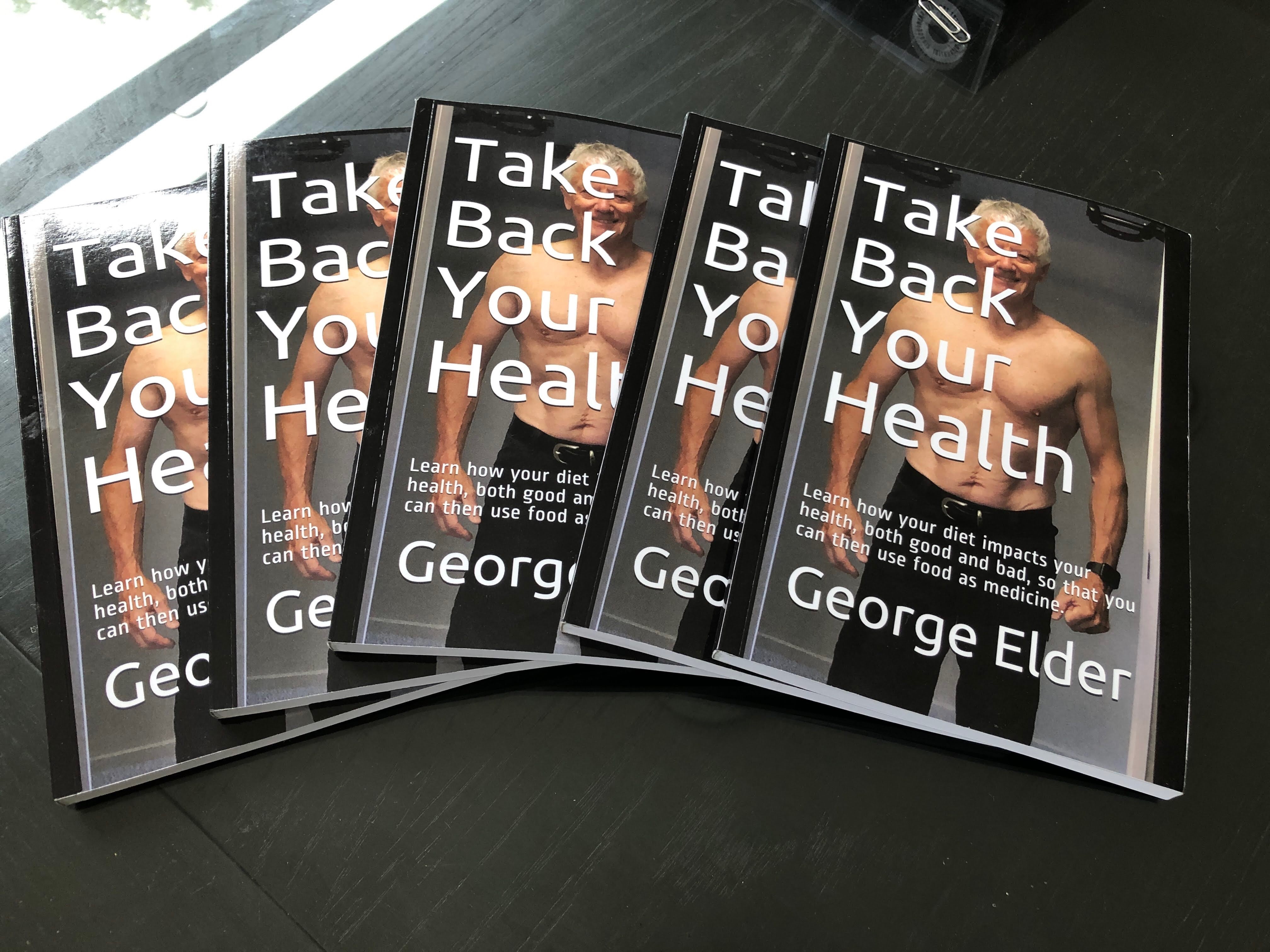
My e-book is now online

After a long journey, my shortened e-book has made it onto the Kindle bookstore on Amazon.

You can find it here: https://www.amazon.com/Take-Back-Your-Health-medicine-ebook/dp/B08LKW42BJ/ref=sr_1_8?dchild=1&keywords=take+back+your+health&qid=1603614924&s=books&sr=1-8

Wow! What a fascinating revelation on what I eat and why I have dietary issues. A great summary of many complex nutritional issues and better still, provides references to research plus a way forward. It will be a challenge for me to be disciplined to apply the lessons learnt from this book but by taking it in stages, I am sure I will become more healthy. What a valuable find and so cheap buy! Unbelievably valuable.

Eric, one of my book editors.