Could Snacking increase Obesity

It’s nearly 10am, you have been busy and it is about 3 hours since breakfast. You are feeling a bit cranky and have been watching the clock in anticipation of your mid morning coffee. It’s time to have a drink and to eat those snacks you packed this morning.


What you may not realize is that this is probably the very worst thing you can do for your body. It feels great, it tastes great and you have developed quite a habit of snacking during the day. Often more than 3 snacks in the day, with the last just before retiring to bed. That magazine article you read last weekend, suggested that eating more often would keep your metabolism humming along and that up to 6 meals per day was somehow optimum for your health and may even help you lose weight. They couldn’t be more wrong.


A myth has gradually developed that suggests snacking is healthy and while this is good for the companies making and selling snack foods, it works completely against the way your body is designed to function. Unfortunately this is also taught at nutrition school, but it just does not match how your body works. It is even claimed that this will reduce your total calories for the day, but research shows otherwise and we all know that counting calories is difficult and has no long term benefit.


It is now a well known and established fact that a continuous and high level of insulin is the driver of obesity. Obesity is a hormonal problem and is strongly driven by insulin. This hormone is responsible for fat storage. People who are on insulin injections or pills as part of Type-2 Diabetes treatment, gain weight. Proven fact. Type-1 diabetics whose pancreas can no longer make sufficient insulin, lose weight fast and will die unless they get some insulin. People who have a continuous high level of stress in their lives develop high cortisol levels, which leads to higher insulin and usually weight gain. Proven fact. People on any sort of drug that raises insulin are at serious risk of becoming obese. When we eat, regardless of what we eat, we stimulate the production of insulin which is released to manage glucose in the blood. Research shows that just thinking about eating can trigger insulin secretion. People who are continuously eating throughout the day as a result of snacking on top of 3 or 4 meals a day have a continuous high insulin level.


Hormones are chemical messengers within the body and normally operate in waves. The level is raised to signal or stimulate some action then it is deactivated or reduces normally so that the body does not become accustomed to a high level. This rest period from the action of the hormone allows the body to adjust and ensures that it will still be sensitive to the hormone when it is next released. Without this variation in exposure, the body becomes “adapted” to the hormone and this reduces its sensitivity. You may have already experienced this with other things such as alcohol, salt, sugar, drugs, chilies, sunlight etc. Continuous and high exposure to something desensitizes the body and a higher level is required in the future to achieve the same effect.


Historically your grand parents probably did not eat as often as we do now. I can remember my grandmother telling me that I was not allowed to snack as I would not eat my dinner later. Unfortunately the trend to consume more carbohydrates has helped drive us towards more eating times in the day. When the energy for your body comes predominately from refined carbohydrates such as sugar, flour, rice and foods made from these things, there is limited storage capacity in our bodies for the glucose, resulting in us feeling hungry again about 3 hours later. This encourages snacking to reload our blood sugar and the habit of regular snacking is started. Additionally the very ready availability of snacks from coffee shops, bars, vending machines and cafes also supports this trend.


Take a look at what is for sale in boxes beside the supermarket checkout and you will see plenty of sugar and grain based snack food, conveniently wrapped in smaller portions, sweetened for taste and ready to be purchased for any occasion that you feel the slightest need for extra energy. Unfortunately a tendency to wean children onto a diet of fruit purée, custards, rice, sweet yoghurt and cereals (all as ultra processed carbohydrates) rather than animal based foods will not help. Instead of learning to eat highly nutritious food, they are being trained to expect sweet food. This sweet tooth is further cultivated with sweet treats often used as rewards. These sweet foods stimulate higher levels of insulin secretion than either fats or protein.


When insulin is high plus it is continuous, both conditions are required, the result is a gradual adjustment by your body to the higher level of insulin. As a result the amount needed to achieve the necessary chemical signaling in your body must be raised. This higher level further drives even more raising of the needed level. This adjustment can take place over a number of years so that over this time which may be 10 or 20 years the insulin level just gets higher and higher in a viscous cycle. If insulin in high doses was not toxic to the body and did not promote obesity then this may not matter. But it is and it does promote obesity. This is popularly known as “insulin resistance”. The end game for the obese is often Type-2 diabetes and the end game for diabetics can often be heart disease, blindness, Alzheimer’s disease (Type-3 diabetes) and amputations. Nasty.


There are a number of signs that this condition is developing. Perhaps the easiest to see is if your stomach measurement is more that half the measure of your height. Let’s suppose your height is 170cm or 67 inches (5 foot 7 inches) then if your waist measurement is larger than 85 cm or 34 inches then you are probably developing insulin resistance and may be heading towards Type-2 diabetes. Skin tags can be a sign as are red patches (rosacea) on your skin or dark patches under your arms, your neck or between fingers (Acanthosis Nigricans).


Insulin resistance can also cause a higher level of male hormones (androgens) in women resulting in more hairiness and acne. It also drives up the risk of PCOS (polycystic ovary syndrome) contributing to a loss of fertility in women and is a major contributor to (ED) erectile disfunction in men.


Any way that you can reduce your exposure to excess insulin, will assist in reducing this problem. Ideally you would adjust when you eat and what you eat so that your body gets an opportunity every day to have at least half the day or more with a low insulin level. Unfortunately the longer that you have been exposed to this problem, the more difficult it is to reverse.


Examples of actions you can take from a diet (what to eat) perspective are:
– Drastically reduce the level of sugar in your diet whether from table sugar, added sugar in food or drinks, fructose, high fructose corn syrup, or from those refined carbohydrates such as flour, rice, potato and sugar and products made from these such as bread and pasta.
– You will need to read food labels to see what is included in the ingredients and be aware that sugar comes in many guises. For example “fruit juice concentrate” is really just another name for sugar.
– Cutting out fruit juices, beers, sweet beverages and soda is absolutely necessary. That glass of orange juice is not healthy.
– Avoid ultra-processed food as it is almost all made from refined flour, corn and sugar or contains these. The finer the processing, the faster it spikes insulin. The flour in a slice of white bread spikes insulin faster than refined sugar.
– Focus on eating foods that do not spike insulin strongly such as animal based foods, meat, eggs, cheese, dairy, fish, nuts, shellfish and plenty of fresh or frozen vegetables.
– Minimize fruit to about one piece per day or eat berries. Fruit sugar is fructose. Excess fructose leads directly to insulin resistance.


From a “when” to eat perspective. Stop snacking. Reduce the number of meals to 3 per day maximum with the last meal of the day at least 3 hours before bed time. No more snacking. For a more intensive detox, you may wish to confine your eating to 6 hours per day with a suggested window from 12 noon to 6 pm and then only drink water, or unsweetened beverages such as tea and coffee at other times. This means giving up breakfast. It is not the most important meal of the day and it will only be a short time until you no longer miss it. Breakfast cereal company marketing has been very persuasive. I have personally foregone breakfast for the last 4 years with only positive results. This 18 hour window of no food is known as intermittent fasting and truly gives the body a chance to experience a very low insulin period each day.

Review my book at bit.ly/3KJwedY or take a look at my blog at www.takebackyrhealth.com for free articles, ideas and help.


You might be looking at this advice and saying “I could never do this”. However only having these bad foods occasionally enhances your enjoyment of them. I am now 4 years into this way of eating and have fully adapted. I even eat sardines on occasions much to the disgust of my grandchildren.


If you are already on external insulin, you may feel that there is no slim future for you, but this is not the case. The old approach to treating Type-2 Diabetes was to add even more insulin to drive down the excess glucose level. But enlightened doctors are now recognizing that the first response must be to reduce the level of incoming glucose which can result in a much lower insulin need. After all high insulin is very damaging to your body. While the short term solution may require insulin, adjusting what and when you eat to match this advice can, in a surprisingly short time, (days) reduce the need for external insulin and in up to 50% of cases, over time, even reverse the Type-2 Diabetes entirely. For a Type-1 Diabetic this same advice can see a significant reduction in needed insulin. Doctors support definitely required for the transition.


If you are already on any form of medication for diabetes either Type 1 or Type 2 or for obesity, or for hypertension then you will need the assistance of your doctor to manage the likely changes in required medications. This is a serious need. Seek professional medical advice before making dietary changes, particularly if you have underlying health problems.


Good health, George Elder, Diet Researcher, Dip. Nutrition. www.takebackyrhealth.com
.

Learning can be slow in Medicine

In 1847, Ignaz Semmelweis , a young doctor working in Austria noticed that more young women were dying after childbirth in the hospital division where autopsies were also also performed, compared with the division where only midwives assisted birthing. This was before people understood about microbes and hand-washing was not common practice.

After a close friends death from a scalpel wound, Semmelweis discovered that diseases were being transmitted on doctors hands, from the autopsies, to the young birthing mothers. Hand washing was implemented and the death rate plummeted. However the obstetrics head doctor refused to accept the practice and Semmelweis contract was not extended. He was persecuted and eventually died in an asylum.

This is an appalling but true story, the details of which have been used as a basis for the fictional book “Unclean Hands” by Andrew Schafer. A true book about this, Titled “The Doctors’ Plague” has been written by Sherwin B. Nuland. It took at least 10 years after this for hand-washing became an accepted practice in medicine.

Would you be astonished to discover that this horrifying situation has not improved much. Let’s take a look at how our treatment for Type-2 Diabetes reveals this continuing problem.

Type 2 Diabetes is a disease which many doctors have come to believe is progressive and unable to be reversed. I understand this is what is taught at medical school.

The reality is that the most common cause of this disease is a normal reaction of the human body to continuous excess levels of sugar/glucose in the blood which is usually caused by too much sugar and starches (carbohydrates) in the diet over many years.

Does a days eating often look like this?
Breakfast: – cereals, bread, bagels, toast, fruit juice.
Snack: – cookie, bagel, muffin, fruit, soda, pastry, corn chips.
Lunch: – sandwich, bread, pasta, rolls, fruit, cakes.
Dinner: – pizza, potatoes, fries, pasta, rice, bread, sweet deserts, beer, burgers.
Supper: – muffin, cookie, sweet biscuit, chocolate.

Every single item in the above diet is producing sugar/glucose in the body. Is every celebration accompanied by copious quantities of sugar based treats? Are rewards and treats usually sugar based?
Some people don’t realize that carbohydrates, except fiber, convert to sugar immediately you eat them.

The safe non-toxic level of sugar/glucose in your blood is only about 1 teaspoon. After you have used some for energy, if the level is still higher than 1 teaspoon, the body has to reduce it urgently by releasing insulin which signals to muscles and the liver to manage the glucose out of the blood to get this toxic sugar level back down. To do this your body either converts the glucose to glycogen for storage in muscles or into fat for storage in the liver or in fat cells.

If your sugar and therefore your insulin is continuously elevated, then over time, your body becomes resistant to this and as a result the level of insulin required to manage the glucose down becomes higher and higher. Eventually it becomes so high that your body can not make sufficient and you are classified as a Type-2 diabetic.

Some say that Type-2 Diabetes is not a disease at all. It is the result of your body’s normal reaction to continuous high levels of blood glucose. Many doctors, instead of working with the patient to get their glucose levels down, prescribe medications including artificial insulin to push the insulin even higher to signal the liver and muscles to pull out that glucose.

Unfortunately high insulin levels are also very toxic and “insulin resistance” is now recognized as a cause of many diseases, including promoting obesity, PCOS, kidney disease, fatty liver, blindness heart disease, and nerve damage which can often resulting in limb amputation.

Research over many years has shown that this disease can often be reversed by reducing the level of carbohydrates in your diet. The process takes time and needs to be managed carefully in the first few weeks in order to manage sugar levels in the blood, as your body becomes adapted to the changes. The changes can be so immediate that sometimes injected insulin levels must be reduced within hours.

Some doctors are now treating their Type-2 Diabetes and pre-diabetes patients with low carb diets and having amazing success reversing this “disease”. In USA, Virta Health ( https://www.virtahealth.com) is treating hundreds of patients remotely using low carb diet approaches. In UK, Dr David Unwin and in New Zealand Dr. Glenn Davies are having success with the same approach. Dr Bhakti Paul MD in NC USA has a great interview on YouTube (https://youtu.be/3suCjlPfkgw) describing how she treats her Type-2 diabetic patients this way.

Other doctors, researchers and nutritionists have been persecuted for advising patients of these low carbohydrate dietary approaches. Dr. Gary Fettke, an Australia Orthopedic Surgeon was censured and barred from delivering nutrition guidance to patients after he objected to the high carbohydrate meals being given to his patients in hospital. This restriction has now been lifted. Dr. Tim Noakes in South Africa, had to fight a court battle for over 3 years for retention of his license to practice medicine, because of complaints about his low carb nutrition advice to patients. Maryanne Demasi a medical reporter and investigative journalist was persecuted for a report on Low Carb diets on the ABC in Australia.

I have come to understand that many everyday doctors or GP’s working in clinics are unable to put patients on low carb diets because this is not supported by the “standard of care” they are required to operate within. Unfortunately this can mean that their Type-2 diabetic patients may not be getting the best care possible and are forced to accept supplementary insulin in order to manage their diabetes. Suicide is extremely high amongst doctors and this type of problem may be exacerbating their stress. Those doctors and nutritionists trying to implement new practices are often unreasonably restrained by tradition.

The modern management of diabetes reversal is initially very critical and some doctors are now finding that fitting CGM’s (Continuous Glucose Monitors) to their patients with a real time link between the patient and the doctor is allowing for very precise management of this critical period of recovery and the beginning of remission.

Dr. Bhakti Paul In conjunction with the website DietDoctor.com have produced a very good overview for doctors about her successful approach to reversing diabetes using this approach. Take a look here on YouTube at: https://youtu.be/3suCjlPfkgw

As always, for health advice and comment check out my blog or find links to my book at: www.takebackyrhealth.com

Regards George Elder

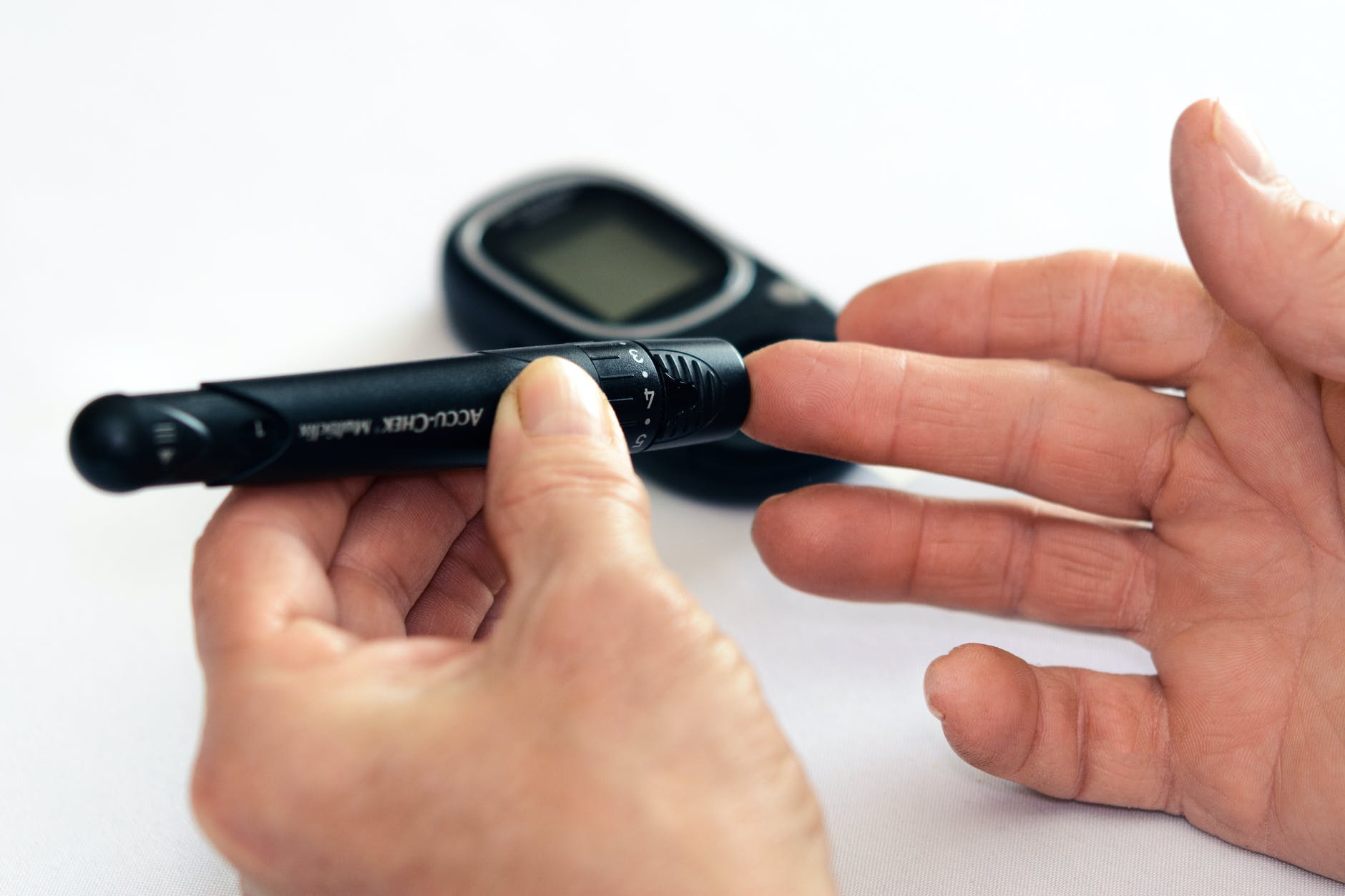
I have Type-2 Diabetes, HELP

Photo by PhotoMIX Company on Pexels.com

You have a problem. Type-2 diabetes is a silent killer and is wreaking havoc on your body. Along the way it will damage your body in ways that are often not reversible and, in the end, will trigger other conditions that could become lethal. What can you do about this?

There are many conditions within your body where a balance is maintained by hormones whose role is to maintain homeostasis (balance). Examples include the arginine / lysine balance, the cortisol / melatonin sleeping hormone balance, the Omega-3 / Omega-6 Polyunsaturated fat balance and your problem is the glucose / insulin balance. In your case the balance has become too heavy on the glucose end and too light on the insulin end. This is usually the result of your pancreas struggling to produce enough insulin to balance the level of dietary glucose arriving into your blood.

You have probably been heading for this failure, for many years as you became gradually more and more insulin resistant and therefor required higher and even higher levels of insulin from your pancreas, to control the incoming glucose. Your HbA1c level will have been rising and your pancreas ramped up its insulin production, but over time it lost the ability to produce the level that was asked of it.
Because your body can only tolerate a maximum of 1 teaspoon of sugar in the blood at any time, whenever you ate confectionary, starches, sweet food or carbohydrates such as bread, pasta, potatoes, beer, cola, bagels, oats, and cereals you pushed up the glucose level in your blood. This pushed up insulin even higher to force the storage of glucose into muscles, liver and adipose fat in order to try and bring this blood glucose level down to non-toxic levels.

There are 2 ways to address a balance problem, either you put more weight on the light end or you take some weight off the heavy end. A doctor may chose to try and reduce your weight of glucose by prescribing a drug like Metformin which inhibits your liver from making glucose, or may choose to put more weight on the light end of the balance by prescribing external insulin. Often the doctor will take a path that minimizes changes to your lifestyle. My understanding is that doctors are often concerned that patients will not adhere to lifestyle changes, so a prescription which alters that balance is possibly a simpler and more sure option.

Changes to your insulin / glucose balance are very serious for your body and getting this wrong can have serious consequences for your health. My father had a pancreas failure when I was only 12 which caused him to act very irrationally at times. His last day as a school teacher was the day he took an irrational “turn” and wouldn’t let the children in his class go home, much to the consternation of all the parents. Sadly, he died of complications from this problem some weeks later.

One of the problems with taking external insulin to restore the balance is that it can maintain a continuously high insulin level in your body which is very unhealthy. This approach also fails to improve your metabolic health which ultimately increases your risk of a more serious COVID19 reaction. The high insulin level can damage many of your organs, your eyes, and can ultimately lead to obesity, heart disease, blindness and even to limb amputation. Many people on external insulin gain unwanted weight.

An alternative approach to addressing this balance is a lifestyle change. This requires a high degree of commitment to ensure success, because failure to stick to the guidelines may mean sickness and a return to external insulin. By a lifestyle change, I mean that we regain the needed balance by significantly reducing the incoming dietary glucose level in food, so that a much smaller level of insulin is needed to manage it. In some cases, this will result in a significant reduction in medication, while in other cases there may be sufficient insulin production capability left in the pancreas for you to get off medication completely. In some cases, the reduction in medication can begin within a few days.

Adding more exercise can also assist as it burns up glucose from muscles which is then replaced by pulling glucose from your blood.

Don’t for a minute think that this type of change is a pipe dream. Doctors all over the world who have begun to understand low carb nutrition are achieving this type of change for their patients. Dr. David Unwin in UK is famous for this approach having been awarded 2016 Innovator of the Year by the UK NHS. In New Zealand Dr. Glen Davies of Taupo has now put 100 patients into remission and in the USA, Virta Health (www.virtahealth.com) is treating Type-2 diabetes patients virtually and putting many into remission all over North America.

If a lifestyle change with reduced medication seems right for you, then the first step is to discuss this with your doctor. As indicated previously, this is a serious change and you will need support particularly over the first 2 weeks as the changes to your diet start to impact your hormones. Should you find that your doctor is not willing to support you, then you may seriously want to look for an alternative doctor, because remaining on high levels of insulin has a particularly nasty outcome for many people and your doctor should not be making this type of life choice for you. Some doctors have not kept up to date with the changes in treatment for Type-2 diabetes and you need to be able to evaluate these better treatment options.

If you would like to help your doctor, maybe you could provide them with a copy of this document from low carb USA, https://www.lowcarbusa.org/clinical-guidelines/

For more information about the suggested lifestyle change and “Taking back your health” with diet as medicine, take a look at my blog page, www.takebackyrhealth.com. You will find there a link to my book on Amazon.

Whatever your decision, good luck with the outcome.
Kind Regards George Elder.